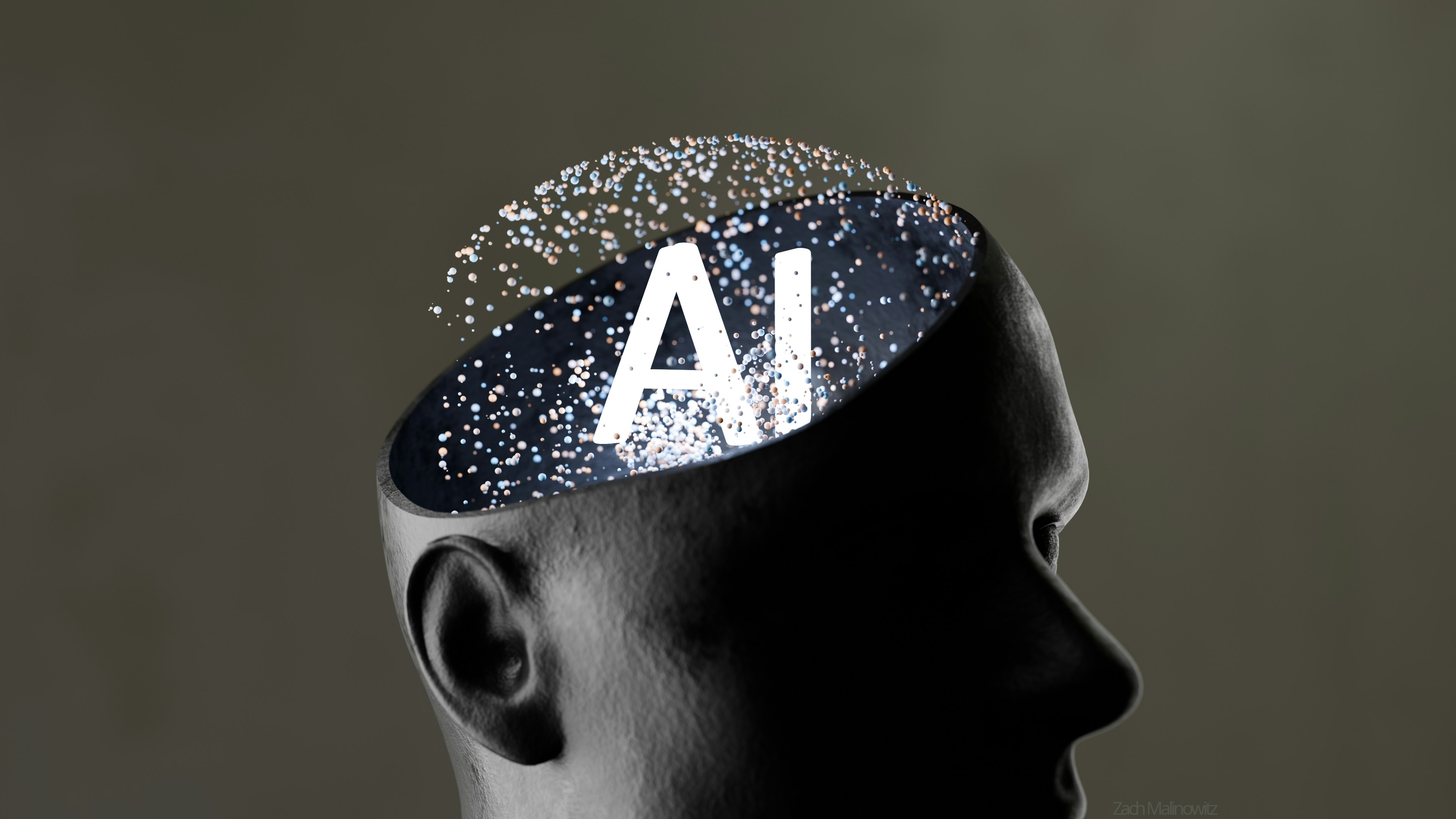
AI Isn't Coming for Creativity. It's Coming for Mediocrity.
James Williamson
The next two years will separate the brands that understand this from those that don't. Here's what's actually happening, and what's at stake.

TOPIC
FOCUS
AI, Brand, Creative
AI and Creative Brands
There's a version of this article that tells you AI is either a magic wand or an existential threat. You've read it before. This isn't that article.
The truth — which is more interesting and more useful — is that AI is doing something far more specific. It's collapsing the cost of average. And that changes everything for brands, designers, content strategists, and anyone whose livelihood depends on making things people actually want to engage with.
Let's talk about what's real, what's coming, and where the opportunities and dangers actually sit.
Where We Are Right Now
AI has already embedded itself into the creative workflow in ways that are impossible to reverse: image generation, copywriting, video synthesis, design ideation, brand voice modelling. These tools exist, they work, and clients are using them. Agencies that pretend otherwise are managing decline, not growth.
What hasn't changed—yet—is quality at the top. The best creative work still requires judgement, cultural intelligence, strategic instinct, and the kind of taste that comes from experience. AI has pattern recognition rather than point of view. That distinction matters enormously. But it won't matter forever.
The Next Two Years: What's Actually Coming
By 2027, expect the following to be mainstream rather than novel:
Real-time brand personalisation at scale. AI will move from generating static content to orchestrating dynamic brand experiences. Think ads, websites, and emails that adapt in real time to individual context. The brands that build the data infrastructure and creative frameworks to support this now will have an insurmountable advantage. Those that don't will be playing catch-up with an ever-receding horizon.
AI-native creative production. The distinction between ‘AI-assisted’ and ‘human-made’ will become meaningless in most commercial contexts. The question clients will ask isn't ‘did AI make this?’ but ‘does it work?’ Production timelines will compress. Cost structures will change. Agencies and studios that haven't rebuilt their model around this will find their margins and value propositions under serious pressure.
Synthetic media goes mainstream. AI-generated video, voice, and virtual spokespeople will shift from curiosity to convention. Global brands are already testing synthetic ambassadors for multilingual campaigns. This will reach mid-market within 18 months. The ethical and regulatory frameworks are lagging badly, and that gap represents both an opportunity and a liability.
The Myths Worth Debunking
Myth: AI will make all content look the same. The opposite is possible, if strategists are thoughtful. AI excels at producing the middle of the bell curve. Used well, it frees human creatives to push further toward the edges, where differentiation actually lives. Rather than homogeneity, the risk is laziness dressed up as efficiency.
Myth: AI understands your brand. It does not. It can mimic, interpolate, and approximate. But without rigorous brand architecture, clear creative frameworks, and human oversight, AI will produce content that sounds like your brand the way a cover version sounds like the original—recognisable, unconvincing, and inauthentic.
Myth: The creative industry has time to figure this out gradually.*It doesn't. The pace of capability development is not linear. GPT-4 to GPT-5 was not an incremental step. The models arriving in 2025 and 2026 will be qualitatively different in ways that surprise people who thought they were keeping up.
The Risks Nobody Wants to Talk About
Brand trust is the asset most at risk. When synthetic media becomes indistinguishable and ubiquitous, authenticity becomes the scarcest thing in the market. Brands that built loyalty through genuine human voice and creative integrity will hold ground. Brands that chased efficiency at the expense of identity will find they've optimised themselves into irrelevance.
There's also a creative talent risk that's underappreciated. If junior creative roles are displaced faster than new roles are created, the pipeline of skilled senior talent thins. The industry's ability to produce the exceptional work that AI can't replicate depends on that pipeline.
The Opportunity Is Significant — for Those Who Move
The honest upside is that AI is the greatest equaliser in the history of brand communications. Small agencies with strong creative thinking can now execute at a scale and speed that was previously available only to the largest players. The boutique studios with real strategic depth, cultural intelligence, and human creative leadership are better positioned than they've ever been, provided they embrace the tools without surrendering the thinking. This is the trick: orchestrating AI with human thinking to deliver great work, at scale, and on time.
The brands that will win over the next two years are those that understand what AI can't do, and invest hard in exactly that. That means distinctive brand voice, human insight at the strategy level, creative courage, and the wisdom to know when to use the machine and when to put it down.
The gap between those brands and everyone else is about to get a lot wider.
Key Takeaways
AI collapses the cost of average — not the value of exceptional. The middle of the market is being automated. The top end has never been more valuable. Know which one you're aiming for.
Real-time personalisation is the next frontier. Brands that build the data and creative infrastructure for dynamic, AI-orchestrated experiences now will be untouchable in 18 months. Those that wait will be catching up indefinitely.
Synthetic media is arriving faster than regulation. AI-generated video, voice, and virtual talent will be mainstream within two years. The ethical and legal frameworks are lagging. Get ahead of this, or it will get ahead of you.
AI doesn't understand your brand — it approximates it. Without rigorous brand architecture and human creative oversight, AI produces convincing imitations, not authentic expression. The investment in brand clarity has never had a higher return.
The talent pipeline is a hidden risk. If junior creative roles are displaced faster than new ones emerge, the industry's capacity to produce exceptional work — the kind AI can't replicate — quietly erodes. This deserves more attention than it's getting.
Boutique studios with real strategic depth are better positioned than ever. AI is the great equaliser. Small, sharp, human-led creative operations can now execute at scale. The opportunity is real — but only for those who move with intention.
Authenticity becomes the scarcest asset in an AI-saturated market. The brands with genuine voice, creative courage, and human intelligence at the centre will hold ground. Everyone else will look increasingly the same.
Ceteris Creative is an AI-empowered creative agency-studio, helping brands think and build smarter. ceteriscreative.com
AI, Brand, Creative
AI and Creative Brands
There's a version of this article that tells you AI is either a magic wand or an existential threat. You've read it before. This isn't that article.
The truth — which is more interesting and more useful — is that AI is doing something far more specific. It's collapsing the cost of average. And that changes everything for brands, designers, content strategists, and anyone whose livelihood depends on making things people actually want to engage with.
Let's talk about what's real, what's coming, and where the opportunities and dangers actually sit.
Where We Are Right Now
AI has already embedded itself into the creative workflow in ways that are impossible to reverse: image generation, copywriting, video synthesis, design ideation, brand voice modelling. These tools exist, they work, and clients are using them. Agencies that pretend otherwise are managing decline, not growth.
What hasn't changed—yet—is quality at the top. The best creative work still requires judgement, cultural intelligence, strategic instinct, and the kind of taste that comes from experience. AI has pattern recognition rather than point of view. That distinction matters enormously. But it won't matter forever.
The Next Two Years: What's Actually Coming
By 2027, expect the following to be mainstream rather than novel:
Real-time brand personalisation at scale. AI will move from generating static content to orchestrating dynamic brand experiences. Think ads, websites, and emails that adapt in real time to individual context. The brands that build the data infrastructure and creative frameworks to support this now will have an insurmountable advantage. Those that don't will be playing catch-up with an ever-receding horizon.
AI-native creative production. The distinction between ‘AI-assisted’ and ‘human-made’ will become meaningless in most commercial contexts. The question clients will ask isn't ‘did AI make this?’ but ‘does it work?’ Production timelines will compress. Cost structures will change. Agencies and studios that haven't rebuilt their model around this will find their margins and value propositions under serious pressure.
Synthetic media goes mainstream. AI-generated video, voice, and virtual spokespeople will shift from curiosity to convention. Global brands are already testing synthetic ambassadors for multilingual campaigns. This will reach mid-market within 18 months. The ethical and regulatory frameworks are lagging badly, and that gap represents both an opportunity and a liability.
The Myths Worth Debunking
Myth: AI will make all content look the same. The opposite is possible, if strategists are thoughtful. AI excels at producing the middle of the bell curve. Used well, it frees human creatives to push further toward the edges, where differentiation actually lives. Rather than homogeneity, the risk is laziness dressed up as efficiency.
Myth: AI understands your brand. It does not. It can mimic, interpolate, and approximate. But without rigorous brand architecture, clear creative frameworks, and human oversight, AI will produce content that sounds like your brand the way a cover version sounds like the original—recognisable, unconvincing, and inauthentic.
Myth: The creative industry has time to figure this out gradually.*It doesn't. The pace of capability development is not linear. GPT-4 to GPT-5 was not an incremental step. The models arriving in 2025 and 2026 will be qualitatively different in ways that surprise people who thought they were keeping up.
The Risks Nobody Wants to Talk About
Brand trust is the asset most at risk. When synthetic media becomes indistinguishable and ubiquitous, authenticity becomes the scarcest thing in the market. Brands that built loyalty through genuine human voice and creative integrity will hold ground. Brands that chased efficiency at the expense of identity will find they've optimised themselves into irrelevance.
There's also a creative talent risk that's underappreciated. If junior creative roles are displaced faster than new roles are created, the pipeline of skilled senior talent thins. The industry's ability to produce the exceptional work that AI can't replicate depends on that pipeline.
The Opportunity Is Significant — for Those Who Move
The honest upside is that AI is the greatest equaliser in the history of brand communications. Small agencies with strong creative thinking can now execute at a scale and speed that was previously available only to the largest players. The boutique studios with real strategic depth, cultural intelligence, and human creative leadership are better positioned than they've ever been, provided they embrace the tools without surrendering the thinking. This is the trick: orchestrating AI with human thinking to deliver great work, at scale, and on time.
The brands that will win over the next two years are those that understand what AI can't do, and invest hard in exactly that. That means distinctive brand voice, human insight at the strategy level, creative courage, and the wisdom to know when to use the machine and when to put it down.
The gap between those brands and everyone else is about to get a lot wider.
Key Takeaways
AI collapses the cost of average — not the value of exceptional. The middle of the market is being automated. The top end has never been more valuable. Know which one you're aiming for.
Real-time personalisation is the next frontier. Brands that build the data and creative infrastructure for dynamic, AI-orchestrated experiences now will be untouchable in 18 months. Those that wait will be catching up indefinitely.
Synthetic media is arriving faster than regulation. AI-generated video, voice, and virtual talent will be mainstream within two years. The ethical and legal frameworks are lagging. Get ahead of this, or it will get ahead of you.
AI doesn't understand your brand — it approximates it. Without rigorous brand architecture and human creative oversight, AI produces convincing imitations, not authentic expression. The investment in brand clarity has never had a higher return.
The talent pipeline is a hidden risk. If junior creative roles are displaced faster than new ones emerge, the industry's capacity to produce exceptional work — the kind AI can't replicate — quietly erodes. This deserves more attention than it's getting.
Boutique studios with real strategic depth are better positioned than ever. AI is the great equaliser. Small, sharp, human-led creative operations can now execute at scale. The opportunity is real — but only for those who move with intention.
Authenticity becomes the scarcest asset in an AI-saturated market. The brands with genuine voice, creative courage, and human intelligence at the centre will hold ground. Everyone else will look increasingly the same.
Ceteris Creative is an AI-empowered creative agency-studio, helping brands think and build smarter. ceteriscreative.com